 Thu 29 Jan, 2026
 Abimbola Bello
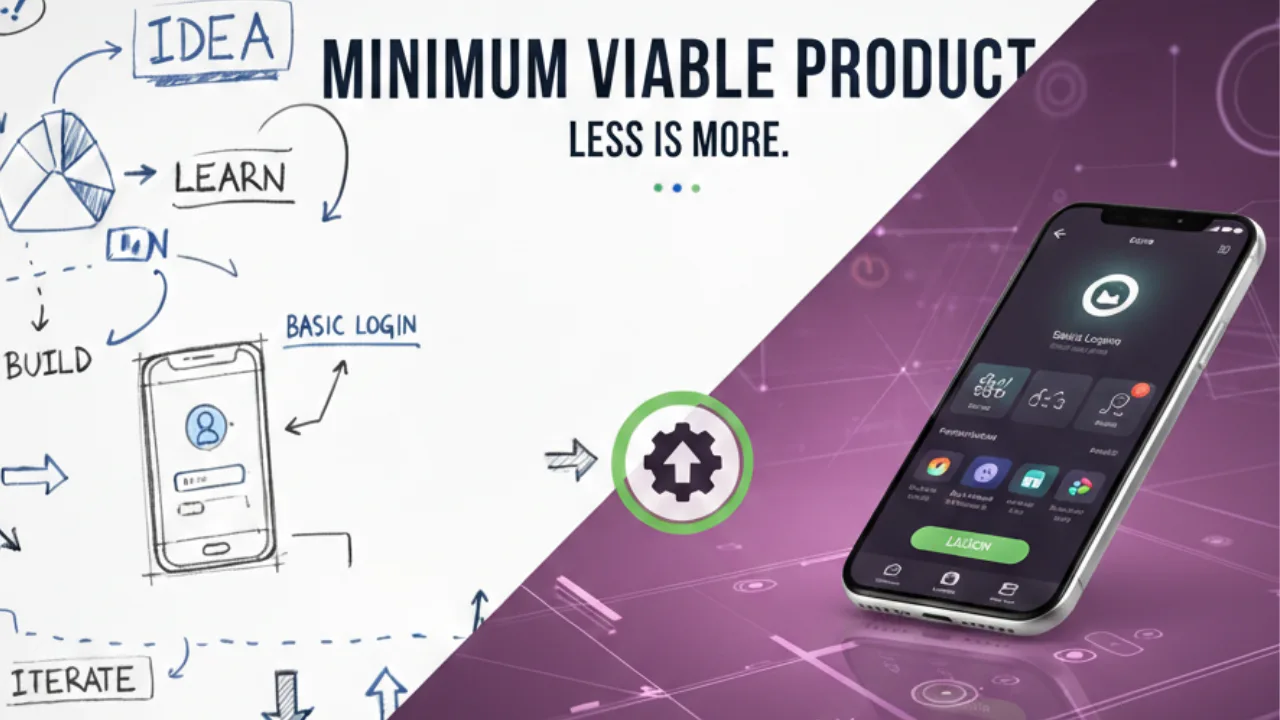
An MVP, short for Minimum Viable Product, is the starting point of a new product idea. It is the simplest version of a product that allows a business to test an idea with real users. Instead of building every feature at once, founders launch with only the essentials, gather feedback, and improve the product step by step.
A good way to look at it is this:
- It solves one real problem
- It works from day one
- It invites feedback from real users
- It leaves extra ideas for later
For example, let’s say a founder is building a food delivery app for busy workers in Lagos. The MVP does not need live rider tracking, loyalty points, and ten payment options. The MVP can start with:
- A simple menu
- Order placement
- One payment option
- Basic delivery confirmation
If users place orders and return the next day, the MVP has done its job. From there, the product development MVP grows based on real use.
This is why the MVP’s meaning goes beyond speed. It helps founders learn early, adjust quickly, and avoid building products nobody asked for.
What an MVP Is Not
At this point, it helps to clear some common mix-ups. Many founders hear “MVP” and imagine something rushed or incomplete. That idea causes confusion and wrong decisions early on. So let us clarify this:
An MVP Is Not a Half-Baked Product
An MVP is not a product full of bugs or broken flows. It is not something you release and hope people manage their way through. No. A proper minimum viable product works as intended. Users can sign up, use the core features, and complete the main action without stress.
A half-baked product looks like this:
- Features that do not work properly
- Screens that confuse users
- No clear purpose
An MVP looks different:
- One clear problem solved well
- Clean and usable flow
- Clear next steps for improvement
The goal is learning from user interaction on a well-built app, not to rushing to go live without consideration for quality.
An MVP Is Not Just a Prototype or Mockup
Another common mix-up is prototype vs MVP. A prototype shows how a product might look or flow. It is useful for early talks and idea testing. Still, it cannot replace an MVP.
A prototype:
- Is often just a design
- Is used for internal review
- Cannot serve real users
An MVP:
- Is a working product
- Is used by real people
- Collects real feedback
If users cannot interact with it, it is not an MVP.
An MVP Is Not the Final Version of Your Product
An MVP is not the end goal. It is the starting point. Many founders fall into the trap of polishing the first version till it’s full of all their envisioned features. That slows learning and finding Product Market Fit.
A good product grows over time. The MVP simply opens the door. Features, design changes, and new ideas should come directly from user feedback.
This clarity helps founders plan better and set the right expectations with their teams.
Why MVPs are Important in Startup Product Development
There are several reasons MVPs are such a cornerstone of product development. We’ll explore a few of those.
Validating Your Idea With Real Users
Ideas often make a lot of sense in the founder’s and the development team’s head. Real users think differently. An MVP puts the idea in front of people who matter most; your users.
With a product development MVP, founders can:
- See how users interact with their app
- Learn what users ignore
- Confirm what users return for
Feedback from real use beats opinions every time.
Saving Time and Development Costs
Building everything at once wastes effort. Many features never get used. An MVP keeps focus tight and spending controlled.
Founders save time by:
- Building fewer features
- Fixing real problems early
- Avoiding costly rebuilds
Money stays where it should be. On growth, not repairs.
Learning Before You Scale
If you scale a product without learning first, you will eventually learn hard lessons. An MVP creates space to test, adjust, and move forward with confidence.
This phase helps founders:
- Spot weak assumptions
- Improve based on usage
- Decide what deserves investment
Choosing an MVP shows clear thinking and respect for resources. That mindset separates thoughtful founders from unwise ones.
When Does a Startup Actually Need an MVP?
Not every idea needs a full product from the start. An MVP is most useful when the goal is to test assumptions and learn quickly without spending too much. Knowing the right moment to build one can save time and resources.
Early-Stage Founders With an Idea
If you have a new product idea but nothing built yet, an MVP helps you check if people actually want it. It is the fastest way to see if your solution solves a real problem. At this stage, focus on:
- Identifying the main problem your product solves
- Offering a simple solution that users can try
- Collecting early feedback to guide development
This approach prevents spending months building a product nobody needs.
Teams Building a New Feature or Product Line
Organizations and businesses with existing products may want to add a new feature. Instead of launching it fully, an MVP allows the team to:
- Test the feature with a small group of users
- Understand if the feature adds value
- Decide whether it deserves full development
This prevents over-investment in features that do not improve the user experience.
Startups Preparing for Funding or Market Entry
Investors and early adopters respond better to a product they can use, not just a concept. An MVP helps startups:
- Show that the idea works in practice
- Gather usage data to support funding requests
- Refine the product before wider release
By starting with an MVP, startups can enter the market with confidence and real user evidence.
What Happens After an MVP Is Launched?
Launching an MVP is not the end of the work. It is the start of learning. The product now faces real users, and their feedback becomes the guide for the next steps. How you respond to this phase often determines whether the product grows or stalls.
Gathering User Feedback
The first step after launch is to listen carefully to users. This goes beyond comments or reviews. It involves observing how people interact with the product and noting where they succeed or struggle.
Key ways to gather feedback include:
- Direct interviews or surveys with early users
- Tracking usage patterns within the product
- Monitoring repeat engagement and retention
- Collecting feature requests and suggestions
The goal is to separate assumptions from reality. Users will show what works and what needs attention, and that information is more valuable than any idea on paper.
Iterating Based on Data
Once feedback comes in, the next step is iteration. This means making improvements and adjustments using real data.
Iteration focuses on:
- Fixing the parts of the MVP that cause confusion or issues
- Improving user flows based on behavior
- Adding small features that meet real needs
- Removing anything that does not help users
Regular iteration keeps the product aligned with user expectations while keeping development focused and cost-effective.
Deciding Whether to Scale, Pivot, or Pause
After gathering feedback and iterating, founders must decide the future direction. The options are:
- Scale: The product is working and ready for more users or markets.
- Pivot: The product works in some ways but needs a new approach or target audience.
- Pause: The idea may not have strong traction yet, and more research or validation is required.
These decisions are easier when guided by evidence. A clear plan after the MVP prevents wasted effort and helps the product grow steadily.
When Should You Involve a Product Team or Development Partner?
Knowing when to bring in a skilled product team can save time and prevent mistakes. The right timing ensures that the MVP is built efficiently and positioned for success.
During Idea Validation and Scoping
The product team helps to define the core problem, target users, and essential features. They can guide what to include in the MVP and what to leave for later.
Benefits of early involvement:
- Clear feature prioritization
- Better planning and timelines
- Reduced the risk of building irrelevant features
When Technical Decisions Start to Matter
Once the idea is clear, technical choices become important. Decisions like which platform to use, database setup, and integrations affect long-term growth. A product team ensures that these choices match your goals without over-complicating the MVP.
When You Want to Avoid Rebuilding Later
Building without guidance can lead to redoing work or starting over. A product team helps create a foundation that can grow naturally. They plan the structure so future updates and new features can fit in without breaking what already works.
By involving experts at the right stages, startups make the most of their resources and avoid common pitfalls.
Common Questions Founders Ask About MVPs
Many founders still have questions about MVPs. These are the questions that come up most often, and getting clear answers helps you plan and move forward.
What is the main goal of an MVP?
The main goal of an MVP is to test a product idea quickly with real users. It is built to see if people actually need or want the solution. Success is measured by learning, not by how many features it has.
How long does it take to build an MVP?
The timeline for an MVP depends on the complexity of the product and the focus of the core features. Simple MVPs can be ready in a few weeks, while more complex products may take a few months.
How much does an MVP usually cost?
The cost of an MVP varies widely depending on the features, platform, and team involved. A lean MVP focuses on essential functionality, which keeps costs lower than a full product.
Can an MVP be used to raise funding?
Yes, an MVP can be a powerful tool to show investors that your idea works in practice. It provides proof that users are engaging with the product, which makes funding discussions more concrete.
How Mactavis Digital Helps Startups Build the Right MVP
Building the right MVP requires planning, focus, and technical skill. Mactavis Digital supports startups at every stage of the process without overcomplicating it.
Services include:
- Product discovery: Identify the core problem, target user, and main features
- MVP scoping: Decide what belongs in the first version and what can wait
- Lean development: Build a usable, focused product quickly and efficiently
- Post-launch support: Collect feedback, improve the product, and guide the next steps
Ready to Build Your MVP?
If you are ready to turn your idea into a product that users can actually use, Mactavis Digital can help. Speak to our product team, book a discovery session, and discuss your MVP idea with us. We guide startups step by step, making sure your first version solves the right problem and sets you up to grow.